2026-W40, 24 articles

This week at The Quant

Everything published in this edition, from the AI buildout to the latest country audits.

Economics

Why the Retail Investor Cannot Solve the Prisoners' Dilemma

The AI buildout is individually rational for every company involved and potentially destructive in aggregate. The index fund owns all of them. That is not diversification. It is a bet that the prisoners collectively produce a tolerable outcome — and that you can identify which cell the warden opens.

4 Oct 20268 min read
Economics

What AI Investment Would Look Like in Peacetime

If AI were a normal capital allocation problem, the Kelly criterion would tell you to invest a fraction of what the hyperscalers are spending. The gap between the two is the war premium. China, constrained by chip sanctions, is not an exception to the war frame — it is the war frame with a smaller arsenal.

4 Oct 20266 min read
Economics

AI Is a $660B Prisoners' Dilemma. Your Index Fund Owns Every Prisoner.

The demand driving the largest infrastructure buildout in corporate history is not organic. It is a subsidy — funded by venture capital and the operating profits of businesses that existed before AI arrived. The subsidy is durable because the stakes are existential. That changes how long the overinvestment can last, and who pays when it stops.

4 Oct 20269 min read
Reviews

AI Investments Are the War Bonds of the New Cold War

The AI buildout is not a bubble. It is a war bond market. $660 billion a year. Four CEOs who say they would rather go bankrupt than lose. War bonds pay off only in victory.

4 Oct 202610 min read
Reviews

$8 Trillion, Three Gulf Wars, and the Ghost of the Athenian Fleet

In 2026, the US opened its third Gulf War in 35 years. Two and a half millennia ago, another maritime superpower made the same bet on a distant, resource-rich region — and lost everything. The mechanism is the same. Only the scale differs.

4 Oct 20268 min read
Finance

$942 Billion in Buybacks, $500 Billion in Subsidies: The Real Economy Strikes Back

Two centuries ago, Napoleon sold wheat to Britain during a blockade rather than starve his enemy out of a war — because he wanted their gold. The same confusion between financial scores and strategic outcomes governed American outsourcing to China for 30 years.

4 Oct 202610 min read
Economics

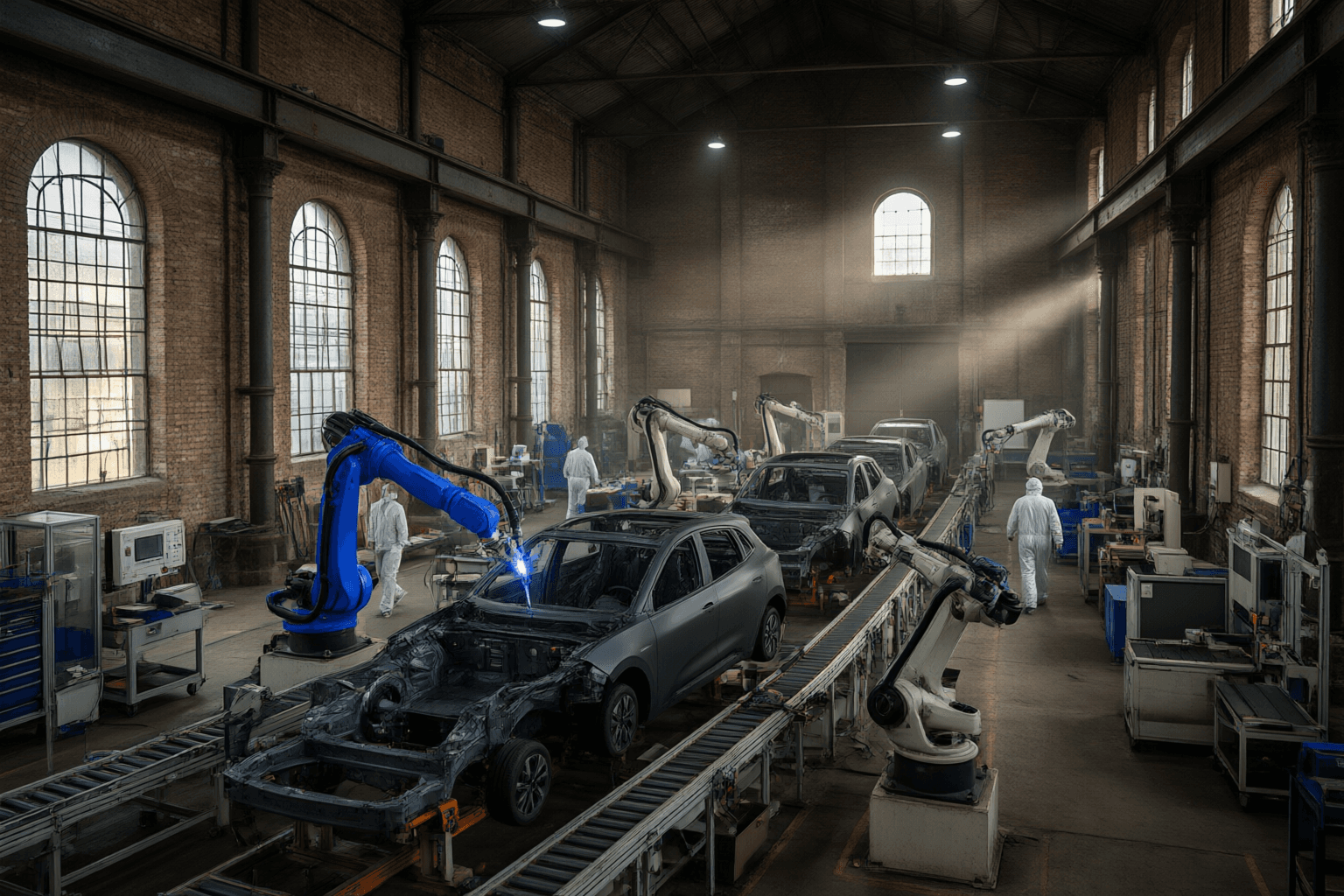
The EV Revolution Is Repeating the Cotton Revolution, at 10x Speed

The European Union's "Made in Europe" mandate arrived in March 2026, requiring 70% local content for EV incentives. Japan's automakers are losing their largest foreign market. The anxiety is structural. A 200-year-old parallel says the anxiety is also familiar — but the differences are what matter.

4 Oct 202613 min read
Trade

Trade Audit 004 · France

France's trade deficit collapsed from a record €161.7 billion in 2022 to €69.2 billion in 2025 — a 57% improvement in three years. The current account is essentially balanced.

4 Oct 20266 min read
Trade

Trade Audit 003 · Brazil

Brazil's trade surplus hit $59 billion in 2025 and is tracking toward $100 billion in 2026.

4 Oct 20267 min read
Trade

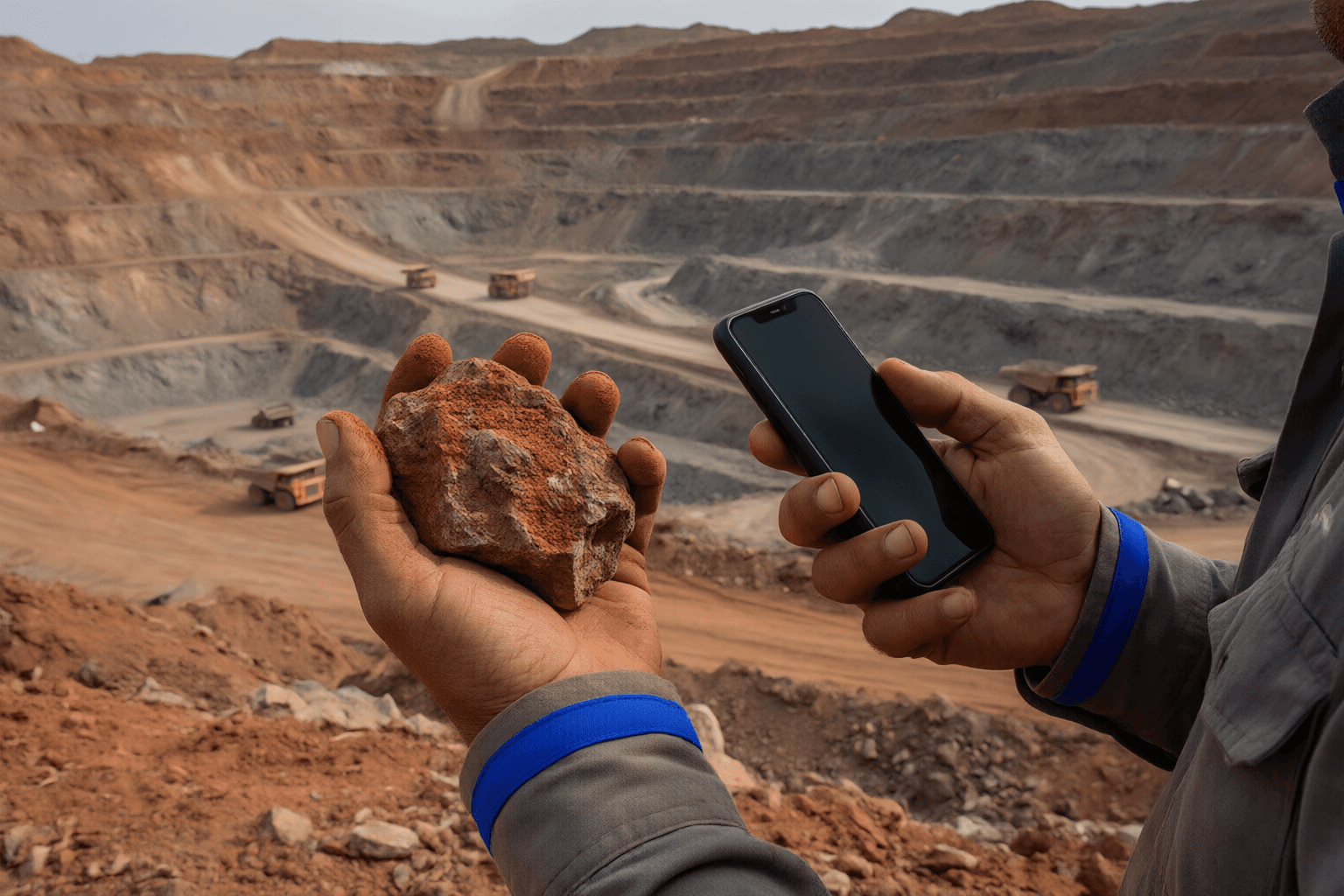
Trade Audit 002 · Australia

Australia sells rocks and gas to China, and buys cars and electronics from China. The trade structure has produced the fastest export growth of any advanced economy since 1990 — an 8.5× increase that generated a $30…

4 Oct 20267 min read
Finance

India's Bond Yields Are Rising. The Trade Data Says It's Not the Growth Story You Think.

The Economist used India to test whether bond yields are rising because of fiscal rot or an AI investment boom. It declared the test inconclusive. The trade data says the test worked — it just returned a split verdict.

4 Oct 20266 min read
Trade

World Trade Hit $34.7 Trillion in 2025. Someone Forgot to Tell the Peak-Globalization Theorists.

The "peak globalization" thesis — that world trade has stopped outpacing GDP growth and the era of hyper-globalization is over — has been declared at least four times since 2008. Each time, trade has rebounded to new highs. The $34.65 trillion in goods and services traded in 2025 is the largest volume in history. The thesis persists because it conflates a noisy ratio with a structural shift, and because it misses a transformation happening on two fronts: what is being traded (services, growing at 8% a year) and who is doing the trading (intra-Asia and South-South flows are growing twice as fast as the global average).

4 Oct 20269 min read
Finance

The Dollar's Share of FX Reserves Hasn't Fallen Meaningfully Since 2015

The de-dollarization narrative is everywhere — BRICS currency plans, central bank gold buying, yuan internationalization. But the dollar's reserve share has flatlined at roughly 57% for a decade. In FX markets, its share just hit an all-time high of 89.2%. The yuan's two payment channels tell the story: SWIFT share is declining, and CIPS transaction growth collapsed from 43% to 1% in a single year. The story the data tells is not a dollar in decline. It is a decade-old diversification that stopped, a yuan that failed to break out, and a narrative that has detached from the numbers.

4 Oct 20269 min read
Trade

China Would Need $150 Billion a Year to Halve Its Trade Surplus

The "boost Chinese consumption" prescription has become orthodox. Run through the numbers, it is directionally correct — but the mechanism it implies is structurally incoherent. A combined approach of import liberalization and targeted export rebalancing is the only arithmetic that works. It is slow, expensive, and politically uncomfortable in both Beijing and Washington.

4 Oct 20268 min read
Trade

Germany's Exports Hit $1.69 Trillion in 2025. The Surplus Machine Is Running Again, But the Foundations Are Shifting

In 2020, for the first time since the Bundesrepublik began tracking the data, Germany imported more motor vehicles and parts from abroad than it exported in value terms.

4 Oct 20264 min read
Trade

Korea's Exports Hit $709 Billion. Semiconductors Accounted for 25% of the Total

The AI boom delivered a record year. The concentration risk is the price of the ticket.

4 Oct 20263 min read
Trade

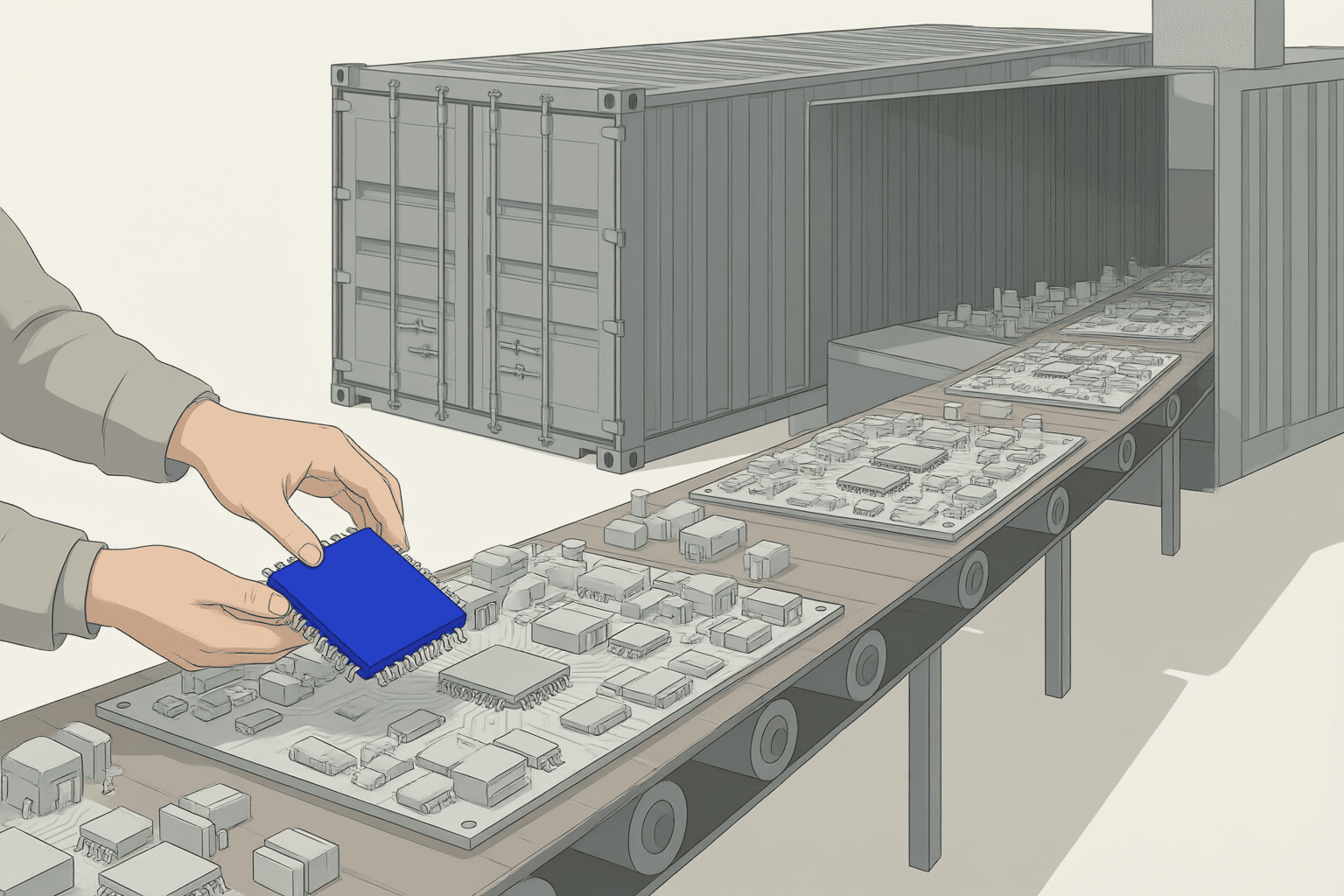
Mexico Overtook China as America's Top Trade Partner. It Still Keeps Only 65 Cents of Every Export Dollar

Nearshoring delivered a record $663.7 billion in exports. The value chain depth is stuck. The two facts are related.

4 Oct 20263 min read
Trade

Vietnam's Exports Grew 168× in 35 Years. Its Domestic Value Added Fell to 52%

The world's fastest-growing export economy is still assembling other countries' components. That's a vulnerability, not just a statistic.

4 Oct 20263 min read
Reviews

The Containment Trap

The Cold War frame prescribes economic containment: decouple, restrict, isolate. The strategy worked against a Soviet Union that was already closed and technologically backward. Applied to China — the world's largest patent filer, the dominant producer of EVs and drones, a country whose trade-to-GDP ratio peaked at 62% — it is a category error. The US is not fencing China in. It is fencing itself out.

4 Oct 20266 min read
Reviews

The Leadership Gap

The Cold War frame assumes democratic leadership is inherently more adaptive. The data on age, turnover, and skills background of the top 100 figures in both countries suggests the opposite. One leadership is getting younger, more technical, and faster-rotating. The other is not.

4 Oct 20264 min read
Economics

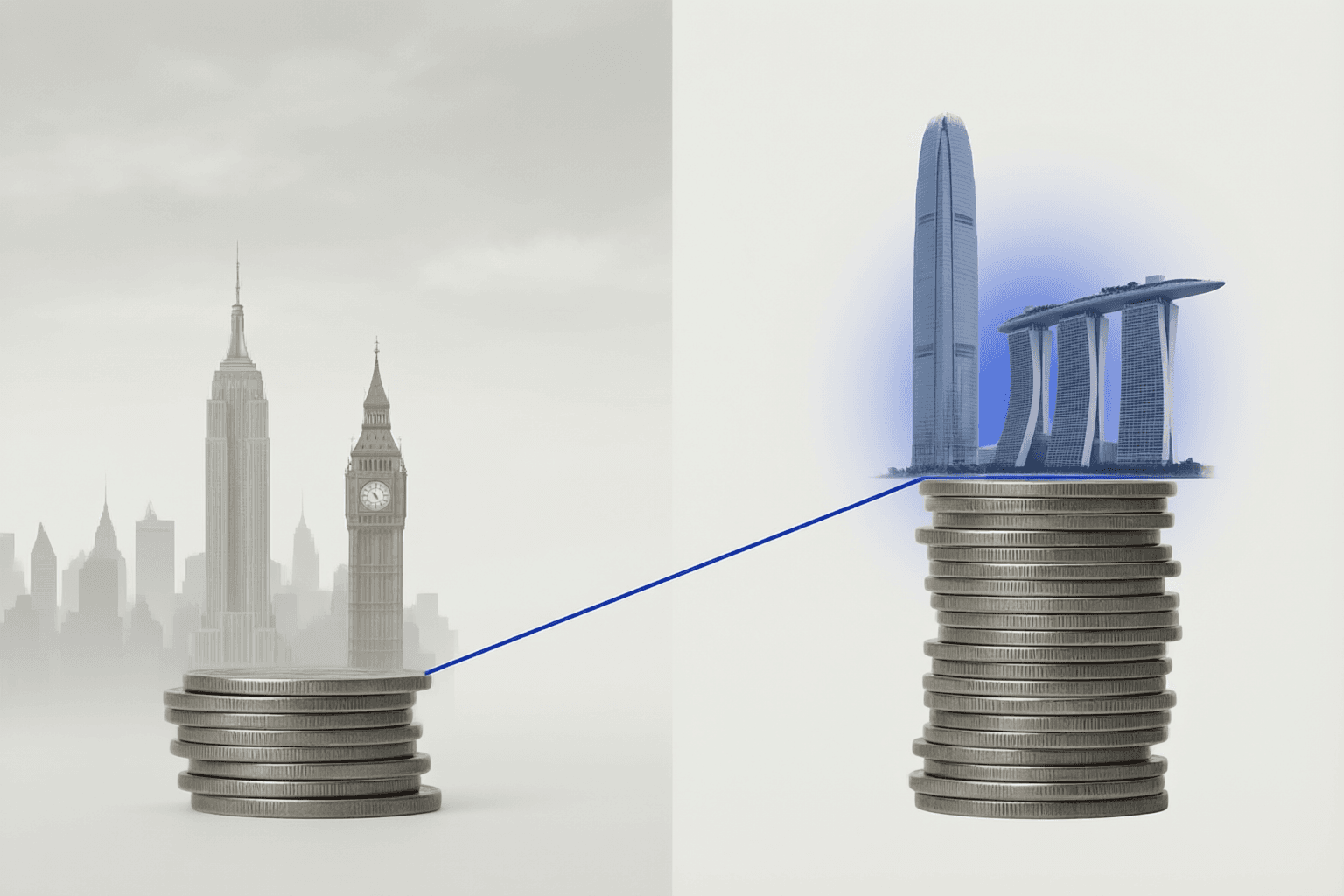
A Tale of Two Cities: What a $500k Salary Actually Buys in New York, London, Hong Kong, and Singapore

A $500,000 salary in the Atlantic finance capitals — New York and London — leaves you with roughly $270,000 after all mandatory deductions. In the Asian hubs — Hong Kong and Singapore — the same gross salary yields roughly $403,000. The $133,000 gap is not a curiosity of marginal rates. It is the product of two entirely different institutional architectures. Over a career, the difference compounds into millions.

4 Oct 202611 min read
Reviews

The Rigidity Trap

The Soviet Union collapsed because its institutions could not adapt. The data on government spending, capital deployment, and infrastructure delivery over the last 20 years suggests the United States is developing the same condition — while China, for all its flaws, is not.

4 Oct 20268 min read
Reviews

AI Is Not the Space Race. A Better Analogy Is Electrification.

The Space Race frame is politically irresistible and intellectually defensible. But it is a narrow bet. AI might be a sprint — or it might not be. What it is for sure is general-purpose technology. The Space Race, in retrospect, was about symbolism. Electrification is the better analogy. The frame determines the strategy. The US is betting on the sprint. China is building the grid.

4 Oct 20267 min read
Reviews

China Is Not the Soviet Union. That Is the Problem.

The Cold War frame says China is the USSR. The data says China is larger, more integrated, more technologically advanced, and more demographically complex than the Soviet Union ever was. The frame is an anchor. It prevents the United States from seeing the problem clearly. And the problem is not that China is the Soviet Union. The problem is that the United States is drifting into the Soviet role.

4 Oct 20263 min read
This week at The Quant, 2026-W40

One email. Every number that mattered this week.

The weekly edition lands on Sunday with the charts, the takeaways and what to watch next.

Free forever. Unsubscribe in one click.