AI Is Not the Space Race. A Better Analogy Is Electrification.
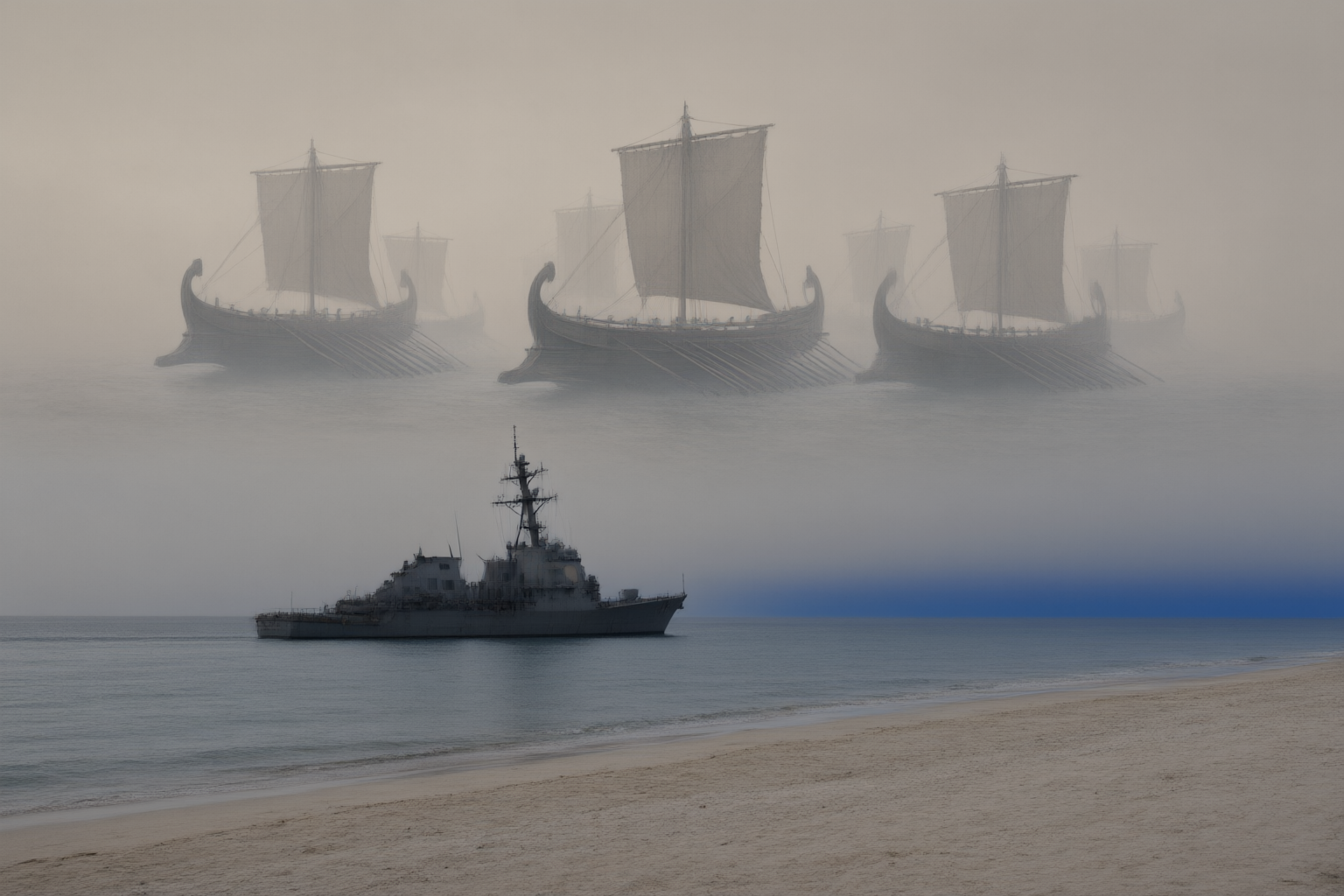
The Space Race frame is politically irresistible and intellectually defensible. But it is a narrow bet. AI might be a sprint — or it might not be. What it is for sure is general-purpose technology. The Space Race, in retrospect, was about symbolism. Electrification is the better analogy. The frame determines the strategy. The US is betting on the sprint. China is building the grid.

In 1957, the Soviet Union launched Sputnik. In 1961, Yuri Gagarin orbited the Earth. In 1969, the United States put a man on the moon. The Cold War Space Race was a sprint with a single, highly visible finish line. The US concentrated resources on elite organisations — NASA, a handful of aerospace contractors, a few universities. The strategy worked. The US won the sprint.
The Space Race frame has been applied to artificial intelligence. The United States is ahead in frontier AI models. China is catching up. The country that reaches artificial general intelligence (AGI) first, the argument goes, wins the century. The frame is politically irresistible. It is also intellectually defensible. But it is a narrow bet.
AI might be a sprint or it might not be. What it is for sure is general-purpose technology. The Space Race turned out to have been about symbolism, not general-purpose technology. The moon landing was a triumph of concentrated resources. The technology did not diffuse. The Saturn V rocket was retired. The last Apollo mission flew in 1972. The US did not return to the moon for more than 50 years. We now know that the Space Race was not the contest that determined the Cold War's outcome. It was a sideshow.
A better analogy is electrification. The first commercial power plant — Thomas Edison's Pearl Street Station — opened in New York in 1882. By 1925, half of American homes had electricity. By 1945, nearly all did. The buildout took 60 years. It required power plants, transmission lines, transformers, and appliances. It required the electrification of factories, farms, and households. It required a regulatory framework, standardised voltages, and a market for electricity. The country that won electrification was not the one that built the first power plant. It was the one that built the grid.
The Space Race frame produces a sprint mentality. The electrification frame produces a buildout mentality. The sprint mentality concentrates resources. The buildout mentality diffuses them. The United States is running the sprint. China is running the buildout.
The sprint: data centres and frontier models.
The visible AI race is concentrated in a handful of companies at the frontier. Microsoft, Amazon, Google, and Meta committed more than $200 billion to data centre buildouts in 2024–2025. The investment is enormous. The concentration is the equivalent of the NASA contractors — Boeing, North American Aviation, Douglas Aircraft — that received the bulk of Space Race spending. A few firms are betting that reaching AGI first will change everything.
The economics of the sprint are already shifting. The cost of intelligence is collapsing. OpenAI's GPT-4 cost roughly $30 per million input tokens when it launched in March 2023. GPT-4o, released in May 2024, cost $5. DeepSeek V3, released in December 2024, cost $0.14. Two orders of magnitude in 21 months. The timelag between a newly released leader model and its nearest competitor is shrinking. GPT-4 led the frontier for roughly 12 months before Claude 3 matched it in March 2024. GPT-4o's lead was measured in weeks. Intelligence is being commoditised even as investment concentrates at the frontier.
The United States leads the sprint by a wide margin. US-headquartered companies operate roughly 5,400 data centres. China operates roughly 450 hyperscale facilities. The US has more than twice the total data centre capacity. But the compute gap is less stark and shrinking. Epoch AI estimates the US has roughly 4–5 times more AI compute than China, down from roughly 10 times in 2020. US export controls on advanced chips are slowing but not stopping Chinese compute growth. The sprint is real. The US is ahead. The question is whether the sprint is the race that matters.
The buildout: electricity, connectivity, and people.
We may not know what AI will need five or ten years from now. But it is hard to imagine AI diffusion without abundant electricity. It is hard to imagine AI diffusion without high-speed data transmission. It is hard to imagine AI diffusion without a large technical workforce. These are the enablement layers. And on each, the US is behind.
Start with electricity. China's electricity generation reached roughly 9,400 terawatt-hours in 2024, growing at roughly 5% annually. The US generated roughly 4,200 terawatt-hours, growing at less than 0.5%. China's grid investment exceeds $100 billion annually. The US invests roughly $30 billion. China has 26 nuclear reactors under construction, more than the rest of the world combined. The US has two. The private sector is building the compute. The public sector is not building the power to run it.
Connectivity is the second layer. China operates 3.84 million 5G base stations, roughly 60% of the global total. The US operates roughly 500,000. China has begun 6G research and development, launched a test satellite in 2024, and has set a 2030 target for commercial deployment. The US formed a 6G alliance in 2020 and released a federal strategy in 2023. The infrastructure gap is not a footnote. It is the physical layer on which AI applications will run.
The third layer is people. China produces roughly 3.5 million STEM graduates annually. The US produces roughly 800,000. The Center for Security and Emerging Technology estimates China has roughly 120,000 AI researchers. The US has roughly 85,000. The gap in quantity is large. The gap in quality is smaller but narrowing. The US still leads in top-tier AI talent, but the pipeline is shifting. More than 40% of AI PhDs graduating from US universities are international students, and an increasing share are returning to their home countries.
The diffusion pattern: who is patenting AI.
The patent data reveals the deepest difference between the sprint and the buildout. The United States and China are the two largest filers of AI-related patents. But the pattern of who is filing them is fundamentally different.
In the United States, AI patents are concentrated in the top AI companies. Alphabet, Microsoft, Amazon, Meta, Apple, and a handful of others account for the majority of filings. The AI patent landscape is a map of the frontier labs. The innovation is real. The diffusion is narrow.
In China, AI patents are diffused across the economy. Data from the World Intellectual Property Organization and the China National Intellectual Property Administration shows that roughly 40% of Chinese AI patent filings come from non-tech sectors — manufacturing firms, telecommunications companies, mining enterprises, retail chains, and state-owned industrial groups. Baidu, Alibaba, Tencent, and Huawei file heavily. But so do Sinopec, State Grid, China Railway, and thousands of smaller industrial firms. The pattern is not a handful of elite labs pushing the frontier. It is a broad industrial base absorbing the technology.
The industrial robot data tells the same story from a different angle. China installed 290,000 industrial robots in 2023, more than half of the global total. The US installed 44,000. China's robot density surpassed the US in 2020 and is now roughly 50% higher. The gap is not about frontier AI. It is about deployment.
Science funding: concentration vs. diffusion.
The US federal R&D budget is increasingly concentrated in the top institutions. The top 10 research universities receive roughly 25% of all federal R&D funding. The top 50 receive more than 60%. The concentration is increasing. The National Science Foundation budget is roughly $9 billion. The National Institutes of Health budget is roughly $48 billion. The funding is substantial. The distribution is narrow.
China's science funding is also concentrated in elite institutions — the Chinese Academy of Sciences, Tsinghua, Peking University. But the total system is larger and growing faster. China's National Natural Science Foundation budget rose from roughly $1.5 billion in 2010 to roughly $5.5 billion in 2024. The Chinese Academy of Sciences alone has a budget exceeding $20 billion. The growth rate is the finding. China's total R&D spending rose from 0.56% of GDP in 1996 to 2.68% in 2024. The US rose from 2.45% to 3.55%. The gap is closing.
The Space Race frame is not wrong because the United States might lose the sprint to AGI. It is wrong because it is blind to the very real possibility that the race to AGI is the wrong race. The race that will matter in any scenario is the buildout. The country that builds the enablement layer — the electricity, the connectivity, the workforce, the industrial adoption — will have a structural advantage that no amount of frontier model research can offset.
The United States won the Space Race. The Soviet Union had Sputnik and Gagarin. The US had the moon. The moon was a symbol. Electrification was not a symbol. It was the foundation of the American century. The question is whether the United States can build the foundation for the next one.
Sources: Epoch AI (compute estimates, cost per token); Synergy Research Group (data centre counts); IEA (electricity generation); GSMA/CAICT (5G base stations); CSET (AI researcher counts, STEM graduates); WIPO/CNIPA (AI patent filings by sector); IFR (industrial robot installations); NSF/NSFC (science funding budgets); World Bank WDI (R&D expenditure).